The Subway: One of New York’s Nine Lives
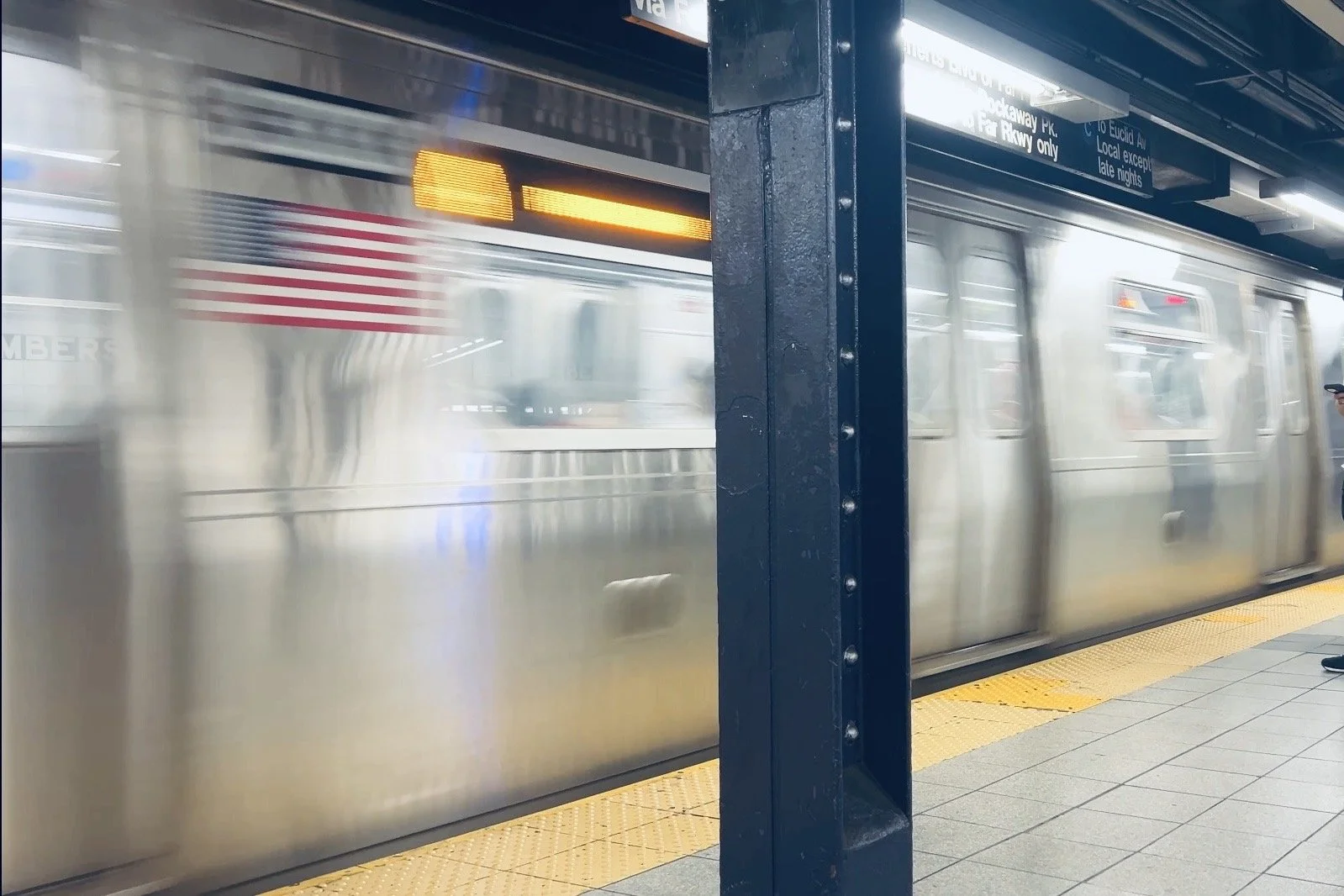
An A train pulls into Chambers St station in Lower Manhattan. — Photo: Alexander Pinheiro
If New York were a cat, the subway would be one of its nine lives.
It is easy to measure the city by what towers above the pavement, from skyscrapers to high-rise buildings and from monuments to bridges with suspension towers. It’s also almost impossible to describe New York without mentioning the neon rush of Midtown, but the city’s true vitality relies on an underground existence. The subway isn’t merely metal on rails designed to move people from point A to point B. It is a lifeline that keeps the city functioning, and simultaneously, a living world of its own.
As a lifeline, it is the circulatory system of a metropolis that famously refuses to sleep. When the subway moves, New York moves. It runs through the darkness beneath the five boroughs, carrying millions of passengers in a single daily flow. You’d see construction workers riding the early morning 4 train from the Bronx down Manhattan’s East Side and into Lower Manhattan. You’d see suit-wearing executives riding the 2 and 3 trains to Wall Street, students balancing textbooks on the C, a homeless person taking a nap without a care in the wold and street performers setting up amps on platform edges. In the tight, rattling enclosure of a single subway car, you’d see both the struggling and the wealthy. People from every walk of life are brought into close proximity by the simple shared necessity of getting somewhere else.
Without it, the entire machine crumbles. It crumbles not just for those crowded onto the platforms, but for the entire city. If the subway stopped, New York’s late-night pulse would wither. Workers wouldn’t reach their shifts on time, while restaurants and theaters would sit half-empty. The people driving taxis or walking to work would realize that their day depends entirely on someone else who took the 7 train at dawn. It is an unseen net holding up every tier of New York life.
Yet, beyond keeping alive and shaping the growth of the city above ground for more than a century, the subway exists as its own distinct world. The system has more than a century of gritty history, as the first underground subway line opened in 1904 under the Interborough Rapid Transit Company (IRT). The massive public network New Yorkers know today is a unification of the city’s three major subway systems. The IRT and Brooklyn–Manhattan Transit Corporation (BMT) were private companies, while the Independent Subway System (IND) was city-owned. They were unified under city ownership in 1940, when New York City took over the IRT and BMT. This explains why today’s subway has some seemingly strange differences in car dimensions, route lettering/numbers, and track infrastructure.
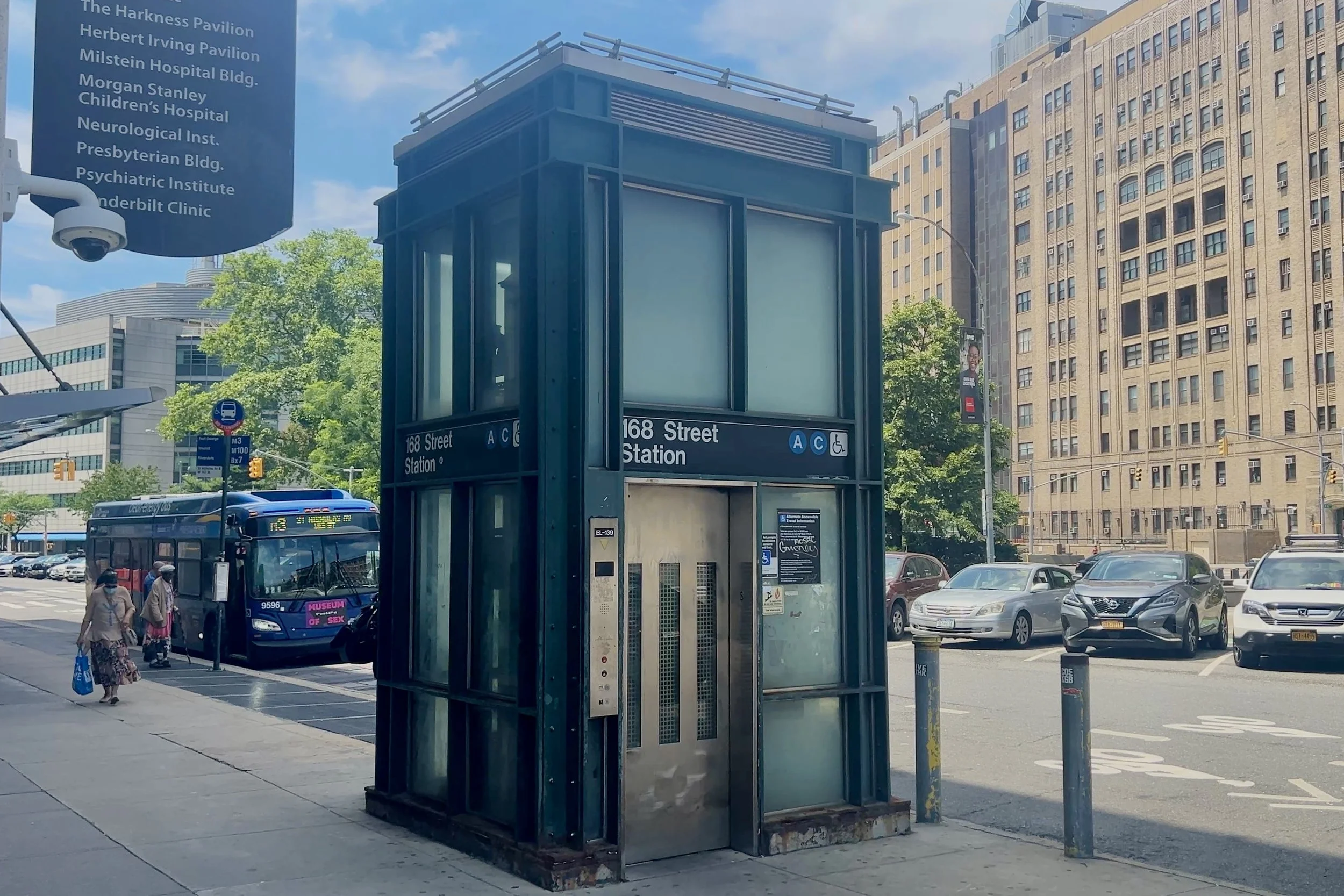
Street-level entrance to 168th Street station in Washington Heights. — Photo: Alexander Pinheiro
Down on the platforms, time operates differently. The heavy, warm rush of air pushing through a dark tunnel signals an arrival seconds before the headlights break the shadow. The screech of steel wheels on curved track becomes a harsh, familiar symphony that everyone is used to. It is a subterranean world that breathes, ages, adapts, and endures. It has survived floods and blackouts, not to mention decades of relentless use without ever truly coming to a halt.
Behind this massive system sits an army of people whose livelihoods depend on keeping the trains running. A vast workforce of conductors, motormen, track workers, station agents, and maintenance engineers spend their working lives beneath the surface. For them, the subway isn’t just a ride; it’s an occupation and a community. They work through the dead of night, at times in damp tunnels so millions of passengers can wake up and reach their destinations without a second thought.
For those who ride it every day, the subway is an unpredictable ritual. It can be hectic and exhausting. You step into a car, encounter unscrupulous characters or raw urban edge, and find yourself asking, “Why am I down here?” But then, the subway surprises you. You strike up an unexpected, brilliant conversation with a complete stranger. You witness moments of unexpected humor or human grace jammed into a crowded car. Through all the chaos, it remains one of the fastest ways to move through the city, cutting straight through the gridlock above.
As an observer, you realize the story doesn’t end inside the car. The real mood shift happens the second you step off onto the platform. Sometimes, when all you crave after a long day is quiet, you walk right into a loud, unscripted busker blasting music. You encounter a moment that can either ruin your commute or completely make your day. Other times, you step out at a station like Times Square–42nd Street and instantly feel a heavy tension hanging in the air. This is signaled by a heavy police presence or heightened security that tells you something either happened or is happening nearby before you even reach street level. But then there are those golden mornings where you step onto the platform, feel the crisp atmosphere of the station, and instantly have the feeling that it’s going to be a good day.
If this underground world is one of the forces that keeps the metropolis moving day in and day out, it leaves one open question for anyone stepping off the platform and back up into the light: if the subway is truly one of New York’s nine lives, what are the other eight? Is it the bodega on the corner, the night skyline, the hustle of Wall Street, or the quiet resilience of its neighborhoods?
Written by: Alexander Pinheiro
© 2026 Sane House Media. All rights reserved.
These articles are published for general information, commentary, cultural interest, and entertainment. They may contain personal observations, opinions, interpretations, or information from third-party sources. While every effort is made to ensure accuracy, no article should be considered a definitive or comprehensive account. Some, all, or none of these conditions may apply to this particular article.
