From the Capital to the Tropics: Sanya Through Familiar Eyes
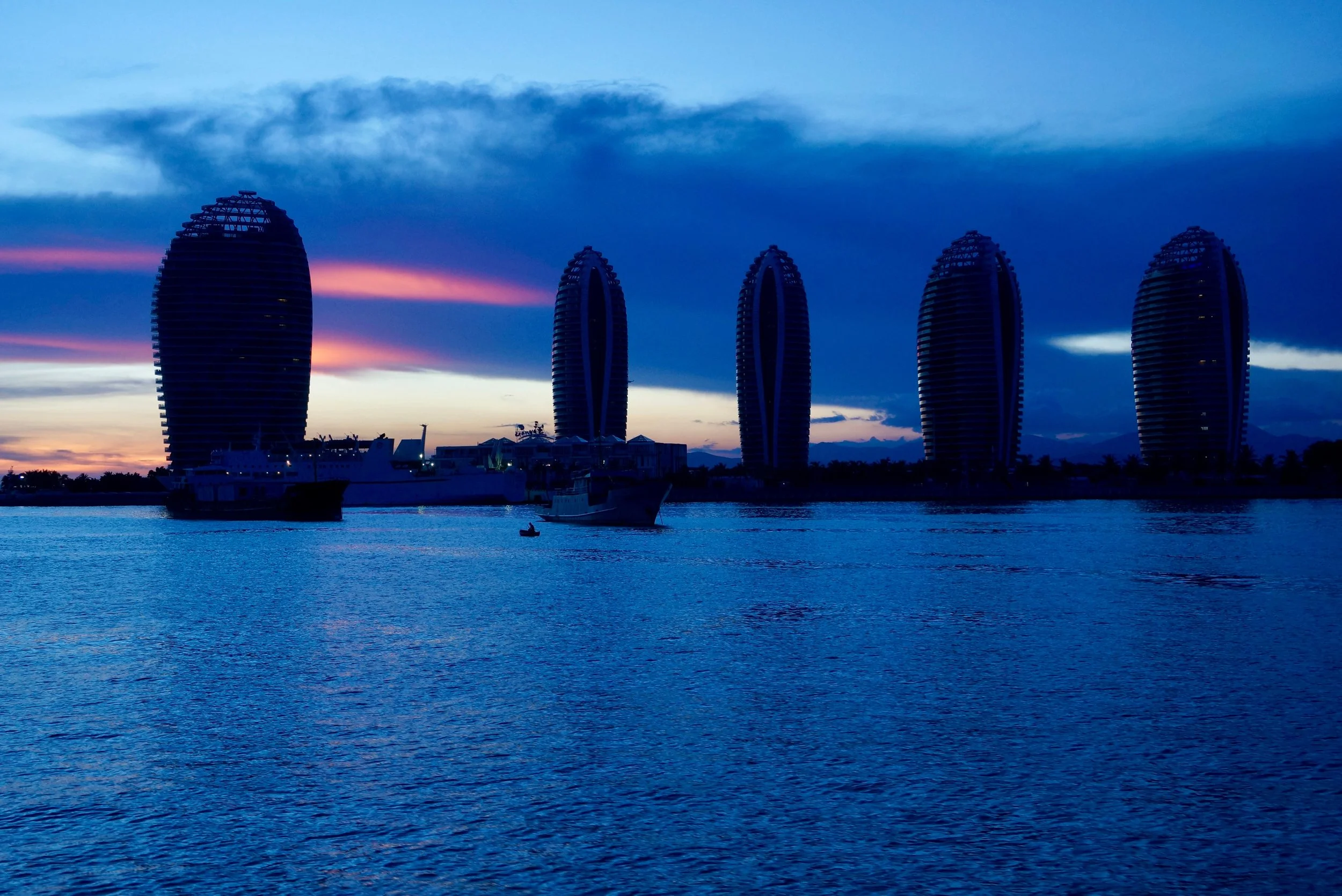
The Phoenix Island Resort towers at dusk in Hainan Province, China, right before the dynamic facade lighting switches on. — Photo: Alexander Pinheiro
I had already been living in China for some time when I went to Sanya. That made the experience different from the one I might have had if I had arrived there as a tourist, and returned home after spending a few days sightseeing. I was coming to Sanya from Beijing, from a life I had already established in China. I was already familiar enough with the language and the culture, to move around without constantly feeling like an outsider. I could communicate with the locals, ask questions, negotiate, order food, and generally make my way through situations without having to rely entirely on someone else. I was still a visitor to Sanya, but I wasn’t really a newcomer to China.
Sanya sits at the southern end of Hainan Island. The climate made the change from Beijing immediately noticeable. The landscape was different, and so were the pace and atmosphere. After living in the north, arriving somewhere tropical felt almost like stepping into another version of the same country. In many ways, Sanya evoked a Los Angeles vibe. The coastal identity was unmistakable: long sandy beaches, palm-lined streets, tropical vegetation, a strong beach-and-leisure culture, and a warm climate throughout the year. There was a striking mixture of high-rise urban development and coastal scenery. Travel and hospitality hubs and other businesses were built around the coastline. It projected a relaxed, holiday-oriented image. This was a clear contrast to the dense, fast-paced rhythm of Beijing and other northern cities I had become accustomed to.
Spending about a week on the island gave me enough time to do more than simply pass through the obvious tourist spots. I moved around visiting different parts of the island. I ate different kinds of food, and had the opportunity to see some of the things that become less visible when a trip is built entirely around a tourist itinerary. Sanya is certainly designed to accommodate visitors, but there is a difference between simply consuming a destination and spending enough time in it to notice how it works. Other than just the sights, I was interested in the atmosphere of the place and in the way ordinary life and tourism coexist.
I stayed in one of the iconic five-building towers of the Phoenix Island Resort. The buildings lit up brightly in dynamic colours every night, creating a striking display. From my balcony, I had a clear split view: the Sanya River stretched out to my left, while the open sea expanded to my right. I could sit outside and watch the colorful ferry boats gliding back and forth across the waterway late into the night. It was one of those views that made it unnecessary to go anywhere for a while. I could simply sit there watching the water and the movement of the boats below, and taking one of those ferries myself turned out to be one hell of an experience. It was not the quiet boat ride where you simply sit back and enjoy the ocean breeze. The ship was packed with various types of live performances and activities designed to keep everyone entertained throughout the trip. It was unmistakably a good tourist experience, but it was also a very Chinese one. It was filled with the kind of energy and enthusiasm that made sitting on the sidelines almost impossible.
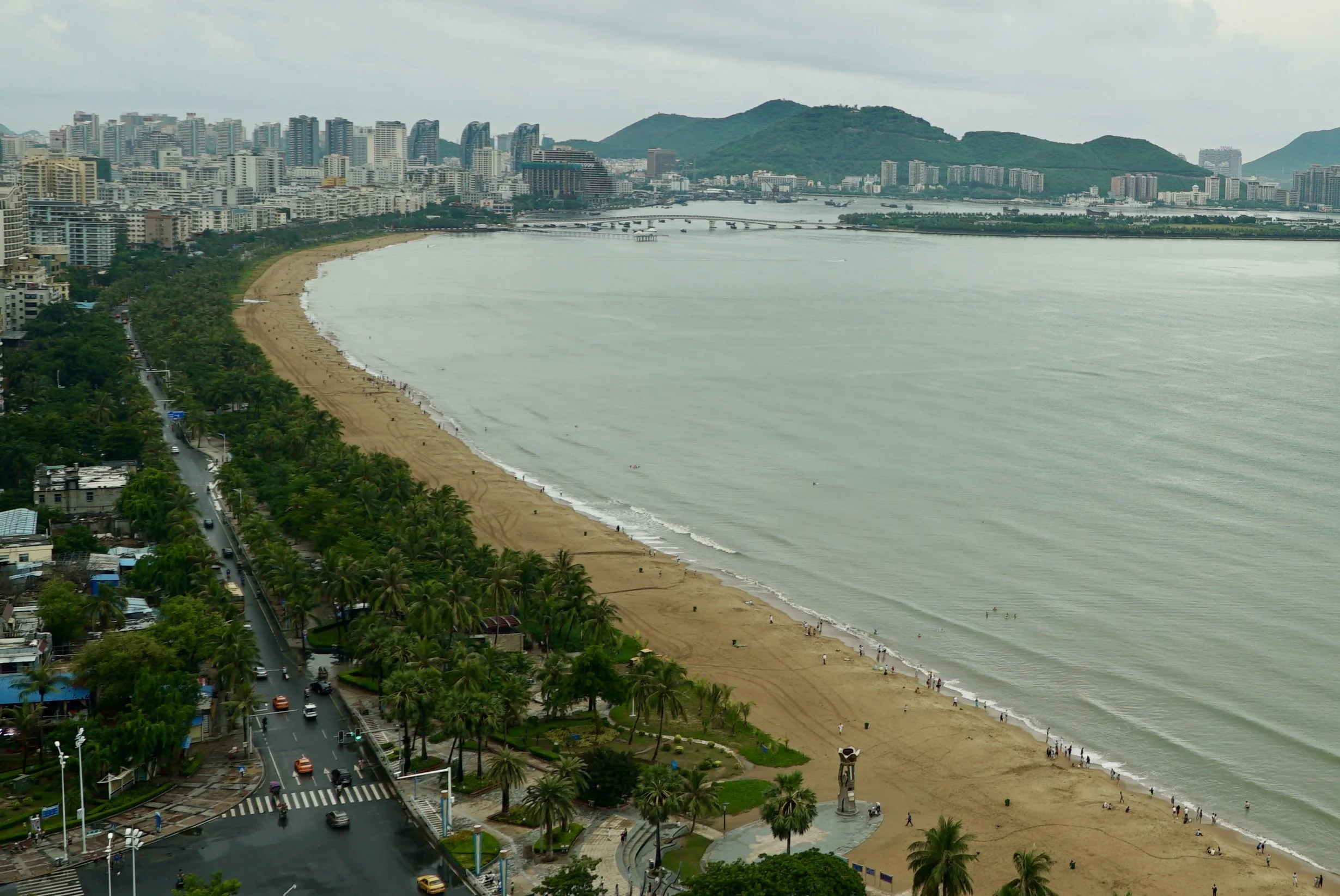
Aerial view of Sanya Bay, with its public beach, palm-lined street, and city skyline. — Photo: Alexander Pinheiro
Alongside international visitors, large numbers of domestic Chinese tourists arrive from different parts of the country for their holidays. As a major destination, the city has developed an entire economy around accommodating everyone. Seafood naturally features heavily in the local food scene, which was not necessarily ideal for me. Other than fish and some members of the shrimp family, I have never been a particularly enthusiastic seafood eater. Still, food is one of the easiest ways to understand a place, so I tried what was available. I got a sense of how much the island’s relationship with the sea influences what people eat. I may not have developed a sudden love for seafood, but that hardly meant I was going to let it stop me from exploring the local food culture.
Being a tourist anywhere in the world comes with a certain vulnerability, and Sanya was no exception. I encountered people who seemed perfectly willing to take advantage of visitors who didn’t know the local prices or customs. There were vendors and restaurant owners whose approach to tourism sometimes seemed less about providing a good experience and more about seeing what they could get away with. Interestingly, this did not appear to be directed exclusively at foreigners. Some of the large crowds of Chinese tourists arriving from other provinces also found themselves dealing with unscrupulous vendors. That was worth noticing because it made the issue less about foreigners being singled out and more about what was happening in this tourist destination. It reflected what can happen when some people see an unfamiliar customer as an opportunity. It wasn’t something that defined my experience of Sanya, and there were plenty of ordinary and welcoming interactions, but it was noticeable enough to become part of the story.
In some situations, being able to communicate in Mandarin made a difference, although at times I got completely lost when people spoke Hainanese. I wasn’t totally dependent on my own assumptions or the explanations being given to me. Having already lived through the daily routines and frustrations of Beijing, Sanya simply gave me another vantage point from which to observe the gap between presented culture and ordinary life.
I enjoyed the island, but what I remember isn’t simply the fact that it was beautiful or that it offered the kind of tropical scenery people associate with a holiday destination. It was the contrast. Sanya was recognizably China, yet it felt different from the China I had become accustomed to in Beijing. The language was familiar, even when I couldn’t understand it. The food had familiar elements, but the local relationship with the sea gave it a different character. The strangeness of it all made it feel like being lost in familiar territory.
There was more to Sanya than beaches and resorts, and the further I moved away from the most obvious tourist experience, the more interesting the island became. What I encountered wasn’t necessarily spectacular at every turn. Some of it was ordinary, and some of it wasn’t really meant for tourist exploration, and that was precisely the point. Traveling through a place is not always about collecting spectacular moments. Sometimes it is about noticing how people live, what they eat, how they interact, how businesses operate, and how a place changes when it becomes accustomed to receiving outsiders. Those ordinary observations can sometimes tell you more about a place than the attractions carefully prepared for visitors.
Taken as a whole, the trip gave me another perspective on a country I had already spent considerable time getting to know. The tropical scenery, the lights of the towers at night, the boats moving across the water, the food, the crowds, and the occasional frustrations all formed a composite picture in which I noticed something different.
That, perhaps, is the difference between visiting a country and living in it before you travel around it. You may still be a tourist in the literal sense, but you don’t necessarily see the place entirely through a tourist’s eyes. You carry some of the country with you before you arrive, and when you leave, you take something else with you. Sanya gave me another piece of China not simply as a holiday memory, but as another perspective of a country that had already become a significant part of my life.
Written by: Alexander Pinheiro
© 2026 Sane House Media. All rights reserved.
These articles are published for general information, commentary, cultural interest, and entertainment. They may contain personal observations, opinions, interpretations, or information from third-party sources. While every effort is made to ensure accuracy, no article should be considered a definitive or comprehensive account. Some, all, or none of these conditions may apply to this particular article.
