Between Two Continents: From Breakfast to Lunch
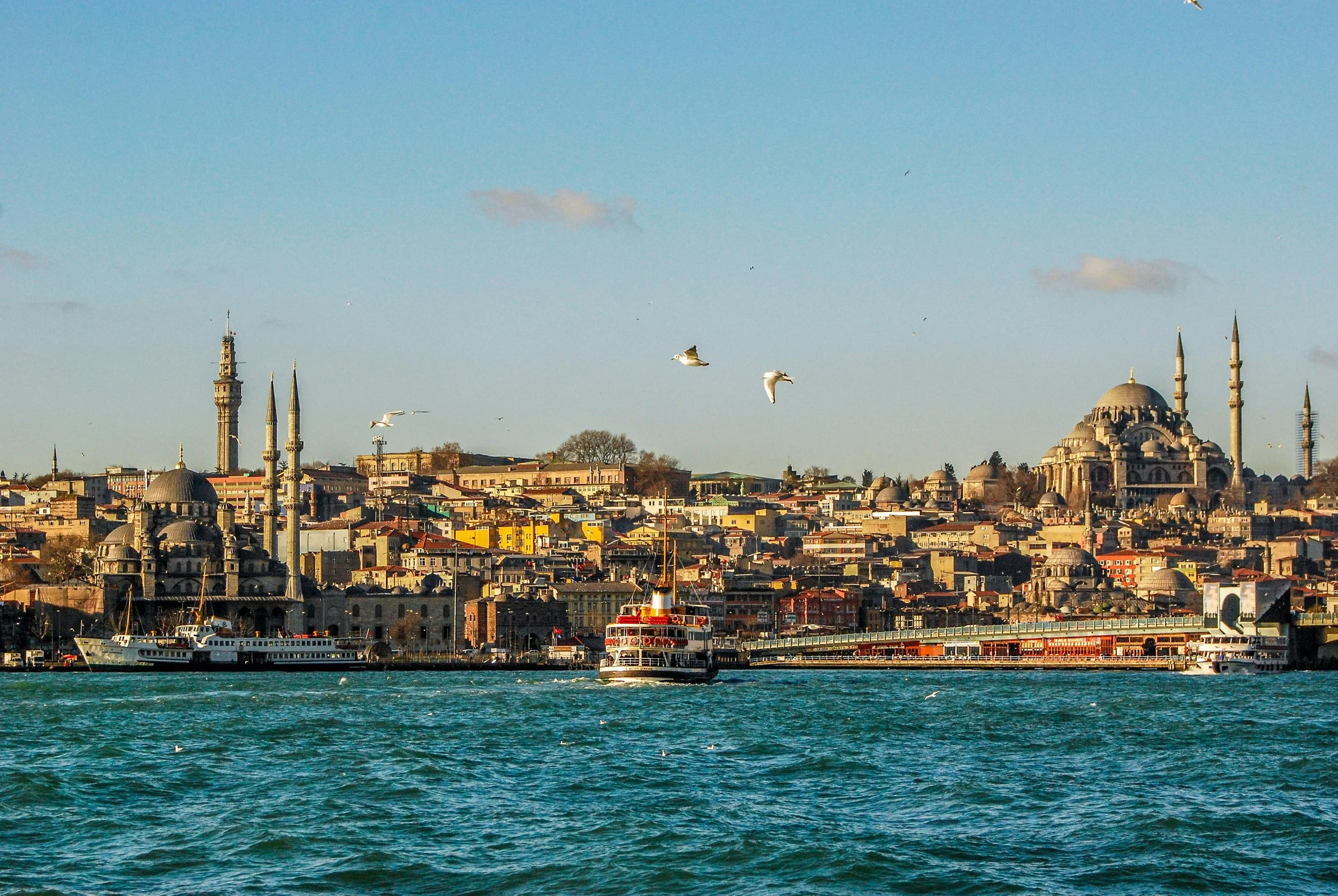
The European shore of Istanbul viewed from the Bosphorus Strait, highlighting the Eminönü waterfront. — Photo: Engin Yapici
I begin my morning seated on the European shore. The air is filled with the aroma of freshly baked bread and roasted coffee. The city is already awake, moving to the clatter of tram lines and the voices of street vendors. They call out to passersby, their baskets filled with sesame-crusted simit. I finish a light breakfast at Coffeetopia Eminönü, a coffee shop three minutes away from the dock. Then I take a final sip of espresso, and make my way toward the ferry terminal at Eminönü. There is neither a passport check nor any other border formality. It is just the ordinary routine of tapping a transit card and walking toward a ferry that will take me from one continent to another. It is almost unreal, like something out of the 19th century. A time when crossing from one continent to another was merely jumping on a boat and saying goodbye to your loved ones.
Stepping aboard, I find a place on the deck as the engine begins to hum beneath me. The ferry pulls away from the dock, and the European shoreline gradually recedes. The further the vessel moves into the Bosphorus the smaller the shoreline becomes behind me. Seagulls follow closely, gliding beside the ferry and occasionally dropping toward the water before rising again. Commuters stand along the railings, some watching the shoreline, others absorbed in conversations that I don’t understand as they aren’t in English. While some sit looking at their mobile phones, others stare quietly across the water. For most of them, this is simply another morning journey. For a visitor like me, however, the ordinariness of it is part of the fascination.
The ferry sails over the Bosphorus Strait, the narrow waterway connecting the Black Sea with the Sea of Marmara. This body of water separates the European and Asian sides of Istanbul. For centuries, its strategic position has made it one of the most important waterways in the region, linking different empires and trading networks. Yet from the deck of a commuter ferry, all of that history disappears. What is left is simply the vessel, the water, the wind, two shorelines, and a city going about its day on both sides.
Midway through the passage, I am suspended between the two landmasses. Behind me is Europe, where I ate breakfast only minutes earlier. Ahead is Asia, close enough now to make out the movement of people along the shore. The crossing is just long enough to look around and take in the breeze before the destination begins to approach.
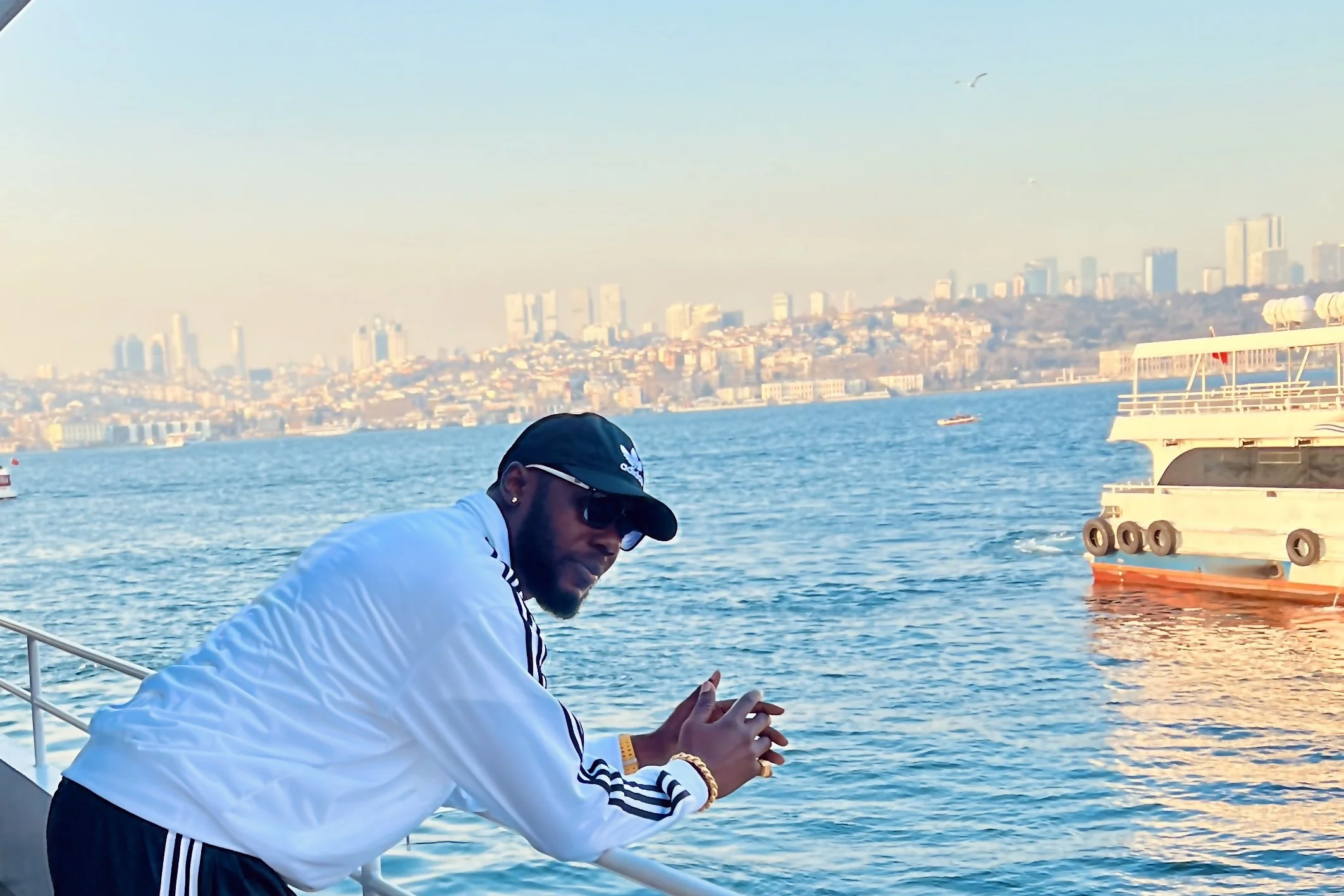
Leaning over the railing and taking in the breeze while crossing the Bosphorus from Europe to Asia, with the European skyline in the background. — Photo: Sane House Media.
The ferry takes roughly 20–25 minutes to make the journey. There is no announcement declaring that I have crossed from one continent to another, and there is certainly no physical boundary in the water. Nothing changes dramatically. One moment I’m looking back toward the European shore and the next, I am approaching the Asian side. The transition is almost effortless and unrealistic for something that sounds so geographically significant.
The ferry glides toward Kadıköy, and the character of the waterfront begins to change. The vessel slows as it approaches the pier, and many passengers gather near the exits. The impatience they exhibit is of a people who have made the trip many times before. The ropes are secured, the gangway is lowered, and within minutes I am walking onto the Asian side of Istanbul.
As I step off the ferry, I make my way to the waterfront avenue. Kadıköy feels different from the parts of the European side most visitors associate with Istanbul. The streets around the ferry terminal are busy, but the atmosphere feels less like a city arranged around monuments. It is more like a city simply going about its life. There is nothing particularly dramatic happening, and that is precisely what makes it interesting. The traffic fades behind me as I cross the busy roads. I wander inland for a few minutes, then get off the street and into the narrow pedestrian lanes without any real destination. The alleys around the Kadıköy market begin to fill with the sounds and smells of the neighborhood. I see fishmongers preparing their stalls and vendors arranging produce. At times, I hear the occasional burst of conversation from a shop doorway as I walk by.
Eventually, I stop at a souvenir stall with a lot of fascinating items on display. I settle for a snow globe with the word ISTANBUL stylistically written on it. Mission accomplished! I’ve been on the lookout for a present for my son. Then I turn back toward the water almost without realizing how much time has passed. I make my way to Kadıköy İskelesi Vapur Kafe: an open-air cafe built directly into the upper deck and waterfront entrance of the Kadıköy ferry terminal. Although I’m not really a coffee enthusiast, I order a Turkish coffee for the experience. It arrives in the small cup as I expected, strong and dense, with the familiar sediment resting at the bottom. I take my time with it. Across the water, I have a view of the European skyline. I can see some buildings and major landmarks with Hagia Sophia and the Blue Mosque looking strangely distant. Only a short while ago, I was sitting over breakfast somewhere on that opposite shore. Now I am sitting in Asia, looking back at Europe over a cup of coffee.
There is something slightly amusing to me about the simplicity of the whole experience. I have crossed an international boundary without showing a passport. I have walked into another continent without changing my money and sat down for coffee without ever feeling that I had actually left the city. Istanbul makes the extraordinary feel routine.
After the coffee, I still have enough time for another slow walk. So, I follow the waterfront for a while, watching people fish and ferries move back and forth across the strait. Some passengers are heading toward the European side, presumably for work, while it seems others are returning home to the Asian side. The same crossing that feels symbolic to me is simply part of the city’s transportation system for the people who live here.
Eventually, the morning begins to give way to afternoon. I make my way back toward the pier, joining other passengers waiting for the next ferry westward. There is something satisfying about making the return journey after having spent only a few hours on the other side. Unlike flying, where you are disconnected from the route itself, unless you’re the pilot, I am returning on the same water that brought me. Gradually, the European shoreline grows larger ahead. By early afternoon, I can be back on the European shore in time for lunch. The entire excursion has taken only a morning, yet it has contained a ferry ride, a crossing between continents, a walk through another part of the city, shopping, a Turkish coffee by the water, and a return journey across the Bosphorus.
It is easy for me to make Istanbul sound like a city divided between two continents. In practice, the city seems far less interested in the distinction. Its ferries cross the water all day and its people move freely between the two shores. What looks extraordinary to me as a visitor and remarkable on a map becomes an ordinary part of daily life. I can begin my morning in Europe, have coffee in Asia, and return for lunch without ever feeling that I have undertaken a major journey.
Perhaps that is what makes the crossing memorable, though describing it hardly does the reality justice. It has to be experienced, as I can only describe the feeling it evokes in me. The distance between two continents would normally be measured in thousands of years of history. But in Istanbul, on an ordinary morning, it can also be measured in the time between breakfast and lunch.
Written by: Alexander Pinheiro
© 2026 Sane House Media. All rights reserved.
These articles are published for general information, commentary, cultural interest, and entertainment. They may contain personal observations, opinions, interpretations, or information from third-party sources. While every effort is made to ensure accuracy, no article should be considered a definitive or comprehensive account. Some, all, or none of these conditions may apply to this particular article.
