From Africa to the World: The Music & Culture That Crossed The Oceans
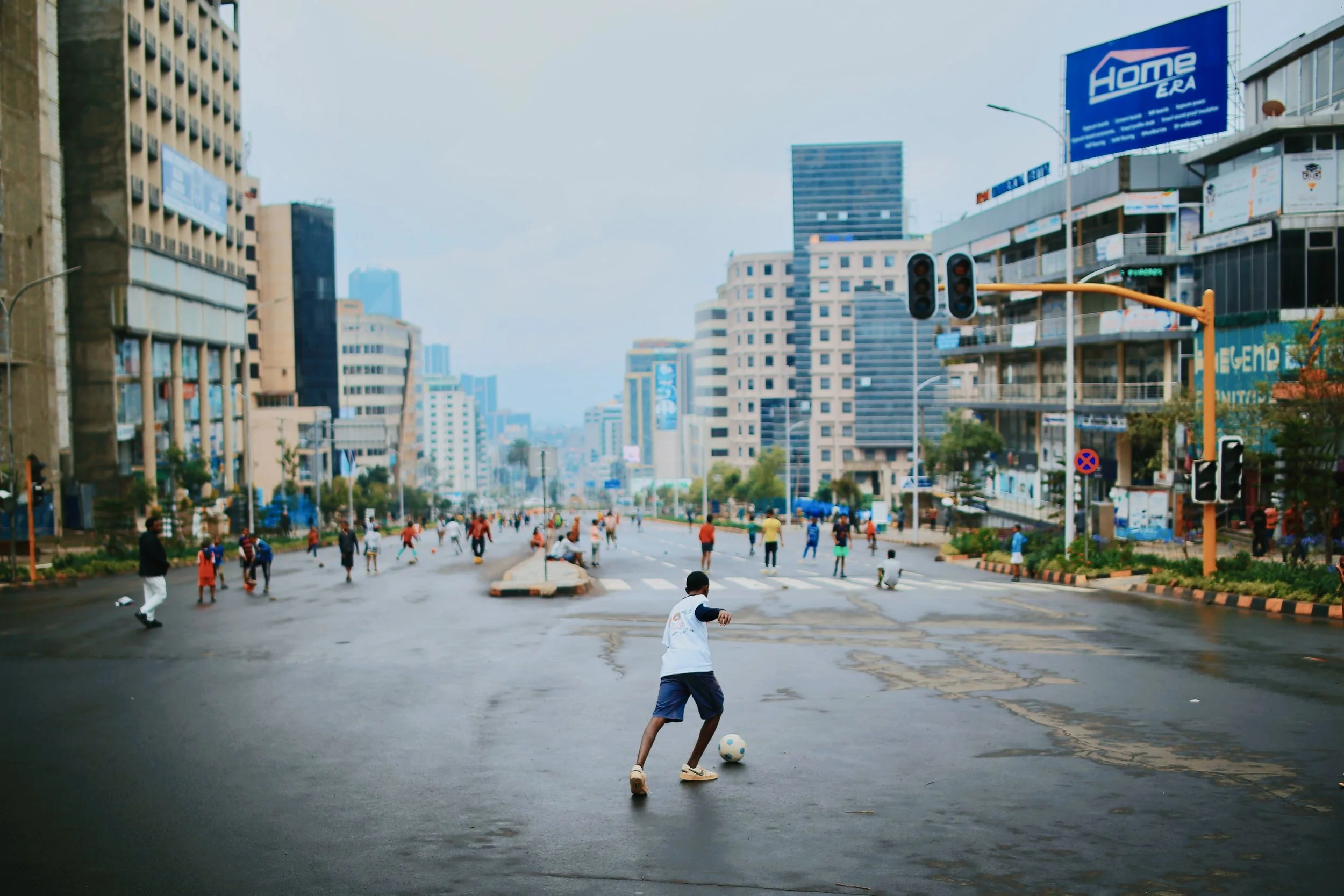
Children play football along Churchill Road in Addis Ababa, Ethiopia, in a rare moment when the normally busy city thoroughfare is free of traffic. — Photo: Abuti Engidashet
When South Africa hosted the 2010 FIFA World Cup, something larger than football was happening. For a month, Johannesburg, Cape Town, and Durban became the face of Africa on the world’s biggest sporting stage. Millions of people were seeing African cities not simply as places on a map, but as places with their own ideas, sounds, styles, energy, and identities. But Africa’s cultural rise had begun long before the opening ceremony.
For decades, musicians had been carrying African sounds to international audiences across the continent. In the early 70s, Nigeria’s Fela Anikulapo Kuti had already made Afrobeat a global force. He turned a distinctly Nigerian musical language into an international cultural and political statement. His son Femi Kuti would take that legacy even further, building a formidable international career of his own with Positive Force. Femi brought Afrobeat to audiences around the world, earning repeated Grammy recognition along the way. Angélique Kidjo emerged in the 1980s from Benin, eventually becoming one of Africa’s most celebrated international artists. She built a career that crossed African traditions, jazz, funk, pop, and world music. Her career is a reminder that African music did not suddenly arrive on the world stage in the 2010s.
South Africa had its own international musical ambassadors too. Hugh Masekela had been performing around the world for decades, while Miriam Makeba with her unmistakable voice, had helped establish South African music long before 2010 as an international cultural force. At the World Cup itself, the message was both audible and visible. The opening celebrations brought together African artists from across the continent. There was Nigeria’s Femi Kuti and South Africa’s Hugh Masekela. Benin’s Angélique Kidjo, Algeria’s Khaled, Ghana’s Osibisa, and a host of other musicians and performers. They placed African musical voices directly on one of the world’s biggest stages.
Nigeria’s story was unequivocally developing along a parallel track. Ghana gave birth to Highlife, with the Kumasi Trio, led by Jacob Sam. They were among the earliest artists to put the emerging sound on record in the 1920s. From there, Highlife spread across West Africa, where Nigerian musicians such as Victor Olaiya, Osita Osadebe, Oliver De Coque and the Oriental Brothers developed their own hugely influential versions of the sound. Alongside Juju, Fuji, Ogene, Afrobeat and other traditions, these sounds helped create the musical ecosystem from which modern Nigerian pop would emerge.
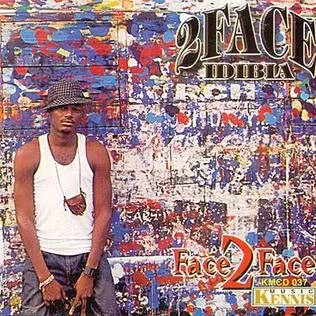
2Face Idibia's 2004 Face 2 Face studio album cover — Photo: Kennis Music
By the 2000s, 2Face Idibia was already showing what that new Nigerian pop could do internationally. His 2004 hit “African Queen” became a major success across Africa and later appeared in the 2006 American film Phat Girlz. Nigerian pop artists were already finding their way into it the international market before the World Cup. What the World Cup added was a different kind of momentum. It demonstrated, on an enormous scale, that African cities could sit at the center of a global media event. That mattered beyond football. International broadcasters, brands, advertisers, and audiences were being exposed to African urban culture as something to experience rather than simply something to report about. Nigeria was particularly well positioned to capitalize on that expanding attention. Its huge domestic market, established entertainment industry, diaspora connections, and rapidly developing digital music economy gave Nigerian artists a powerful commercial base.
Then came Wizkid, Davido, Burna Boy, Tems, and Rema. They inherited the work of earlier generations and pushed Nigerian pop into another league. Wizkid’s “Essence,” featuring Tems, reached a global audience and was later expanded through a Justin Bieber remix. Rema’s “Calm Down” reached an even wider audience through its collaboration with Selena Gomez. And it is important that this is not the story of one Nigerian artist breaking through. They are all filling major arenas and competing for the same global space. That competition has become part of the engine itself: one artist’s international success raises the ceiling for the next. The music also travels without being stripped of its Nigerian character. Nigerian rhythms, languages, slang, melodies, and stories have become part of what international audiences recognize and seek out. The exchange is no longer simply Africa absorbing Western pop. Increasingly, global pop is absorbing Africa.
South Africa has experienced a similar expansion through Amapiano, which grew from an existing South African musical culture and eventually traveled far beyond the country. Ghana continues to contribute through its own rich musical traditions and contemporary artists. Across the continent, local sounds are increasingly moving between African countries before reaching audiences in all over the world.
Fashion tells a similar story, albeit on a smaller scale. African brands and collectives such as Daily Paper and Free The Youth have brought African street aesthetics into international conversations, while major global brands increasingly seek African creative partnerships. The power structure remains uneven, but the cultural exchange is becoming less one-directional.
That is the real significance of the years surrounding 2010. The World Cup did not create Africa’s cultural influence, and it certainly did not create Nigeria’s music industry. Those forces were already moving. What the tournament did was provide a spectacular demonstration of the global appetite for African culture at precisely the moment when African creative industries were developing the means to meet it.
Sixteen years later, Lagos, Johannesburg, Accra, and other African cities are not simply consuming global culture. They are helping shape what the world listens to, watches, and wears.
© 2026 Sane House Media. All rights reserved.
These articles are published for general information, commentary, cultural interest, and entertainment. They may contain personal observations, opinions, interpretations, or information from third-party sources. While every effort is made to ensure accuracy, no article should be considered a definitive or comprehensive account. Some, all, or none of these conditions may apply to this particular article.
